Casa Cañada 13
Cañada 13 house
Casa Cañada 13
Ubicación: Coto de la Cañada, Hacienda San Francisco, Tapalpa, Jalisco, México
Bang Arquitectura: Ari Bárcena, Andrés Ampudia y Erick Gabriel Avalos
Dirección de proyecto: Erick Gabriel Avalos
Equipo Arquitectura: Andremar Sánchez, Diana Rojas.
Equipo Construcción: Guillermo Flores, Griselda Pérez, Edgar Moreno, Ignacio Cruz, Raúl Bárcena, Guadalupe Vázquez.
Arquitectura de interiores: Pastora Camarena
Cálculo estructural: Likantor diseño en estructura
Fotografías y Video: Edgar Fernández + Erick Gabriel Avalos
Área: 1711m2 en terreno y 420m2
Año proyecto: 2021-2023
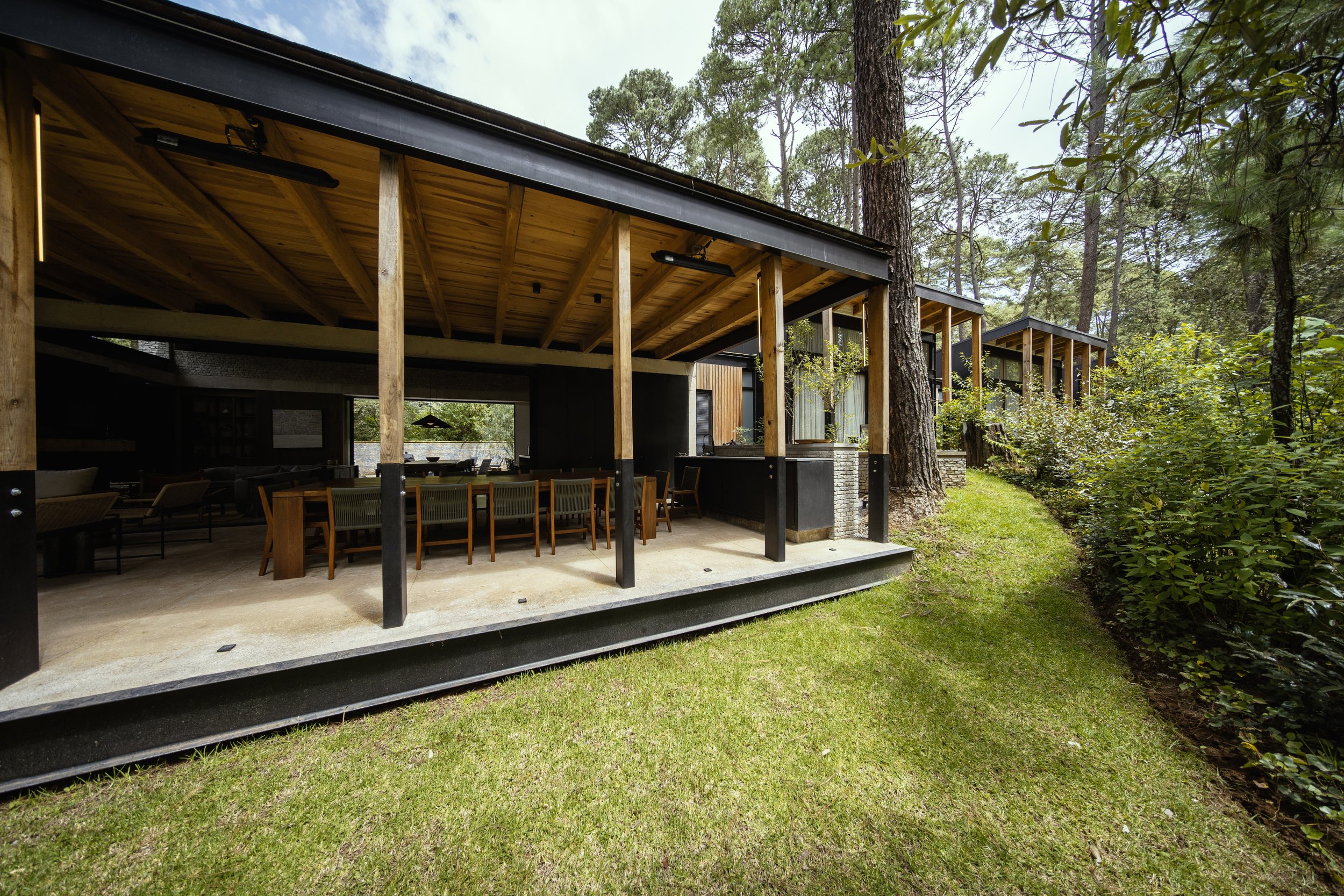
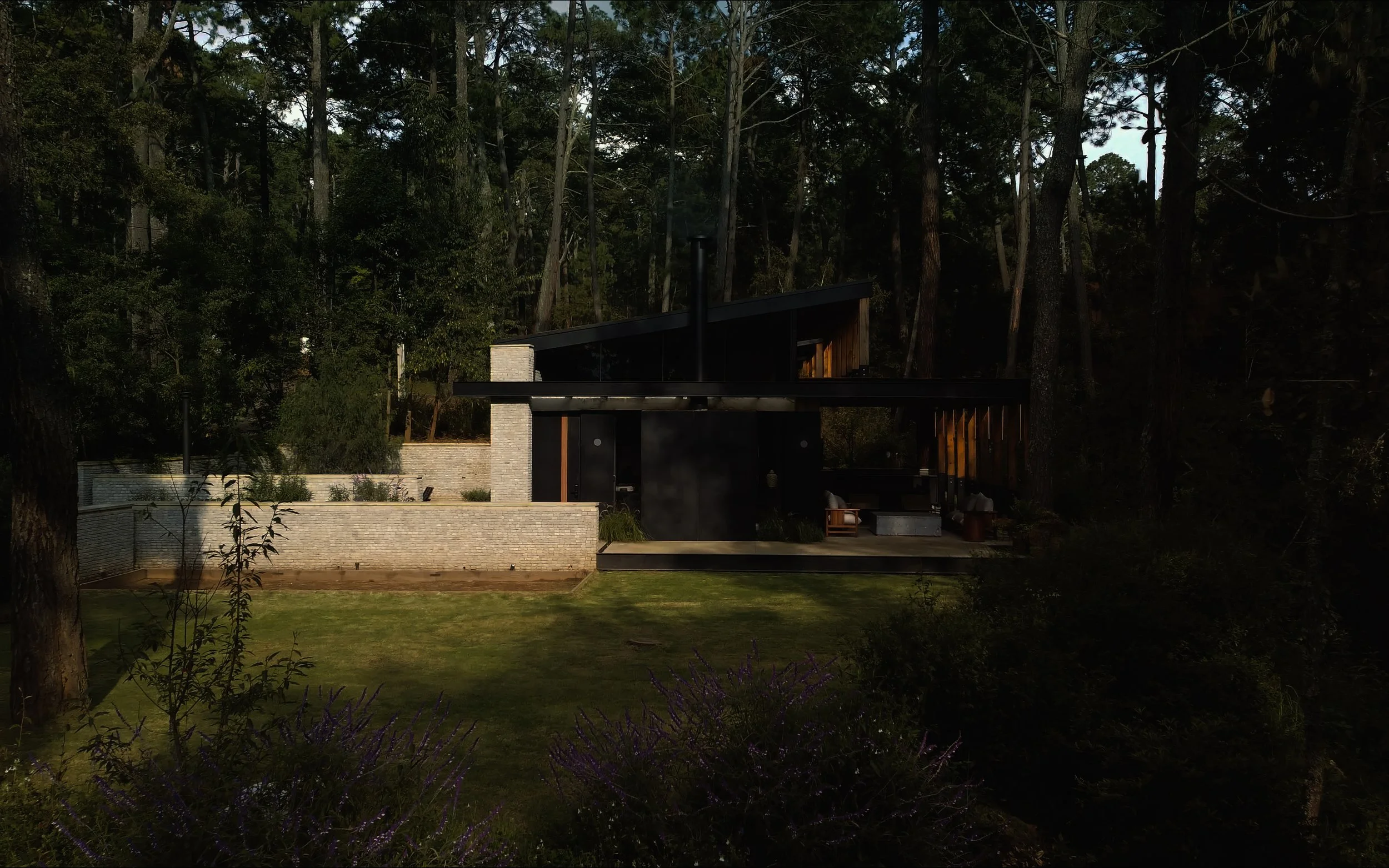
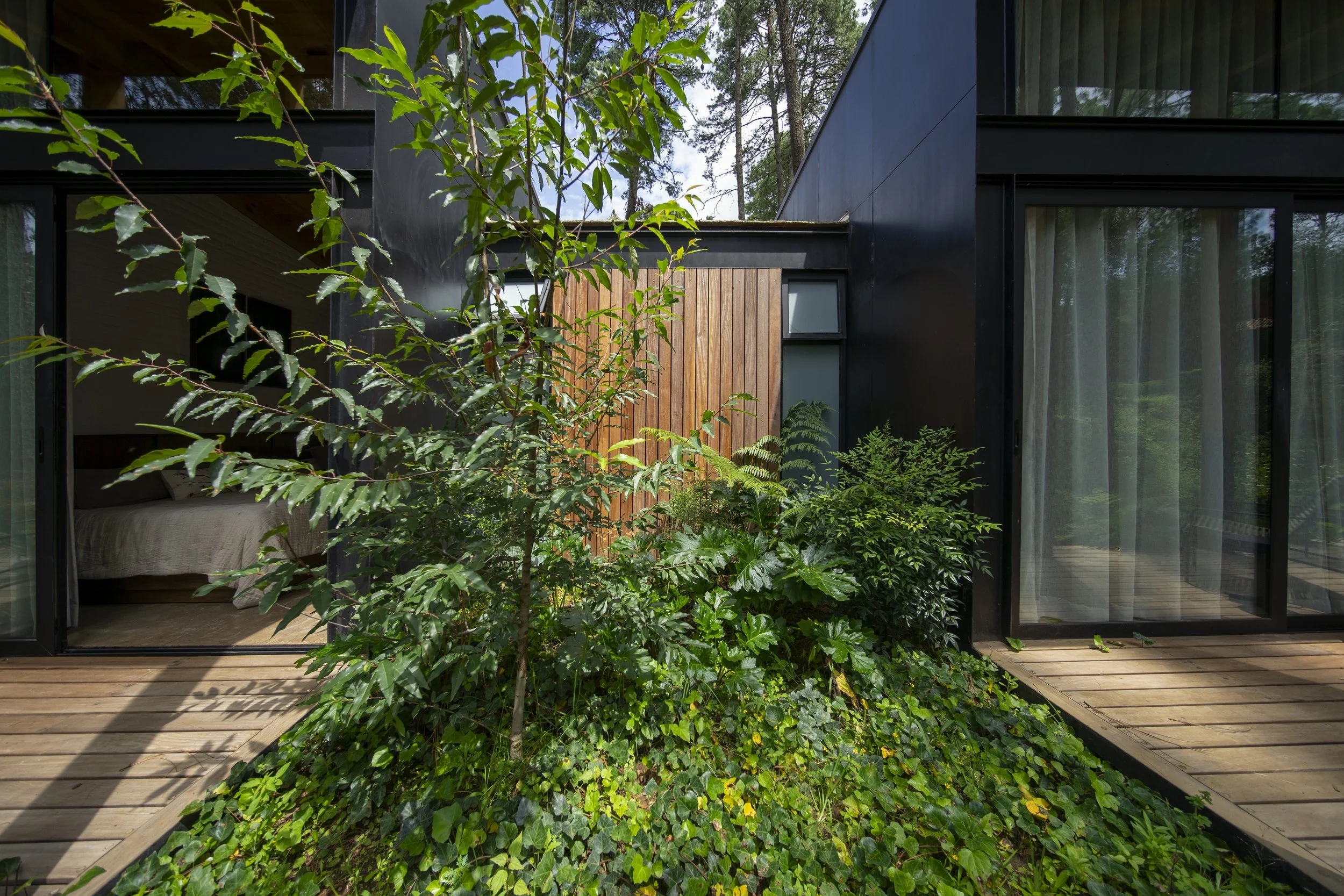
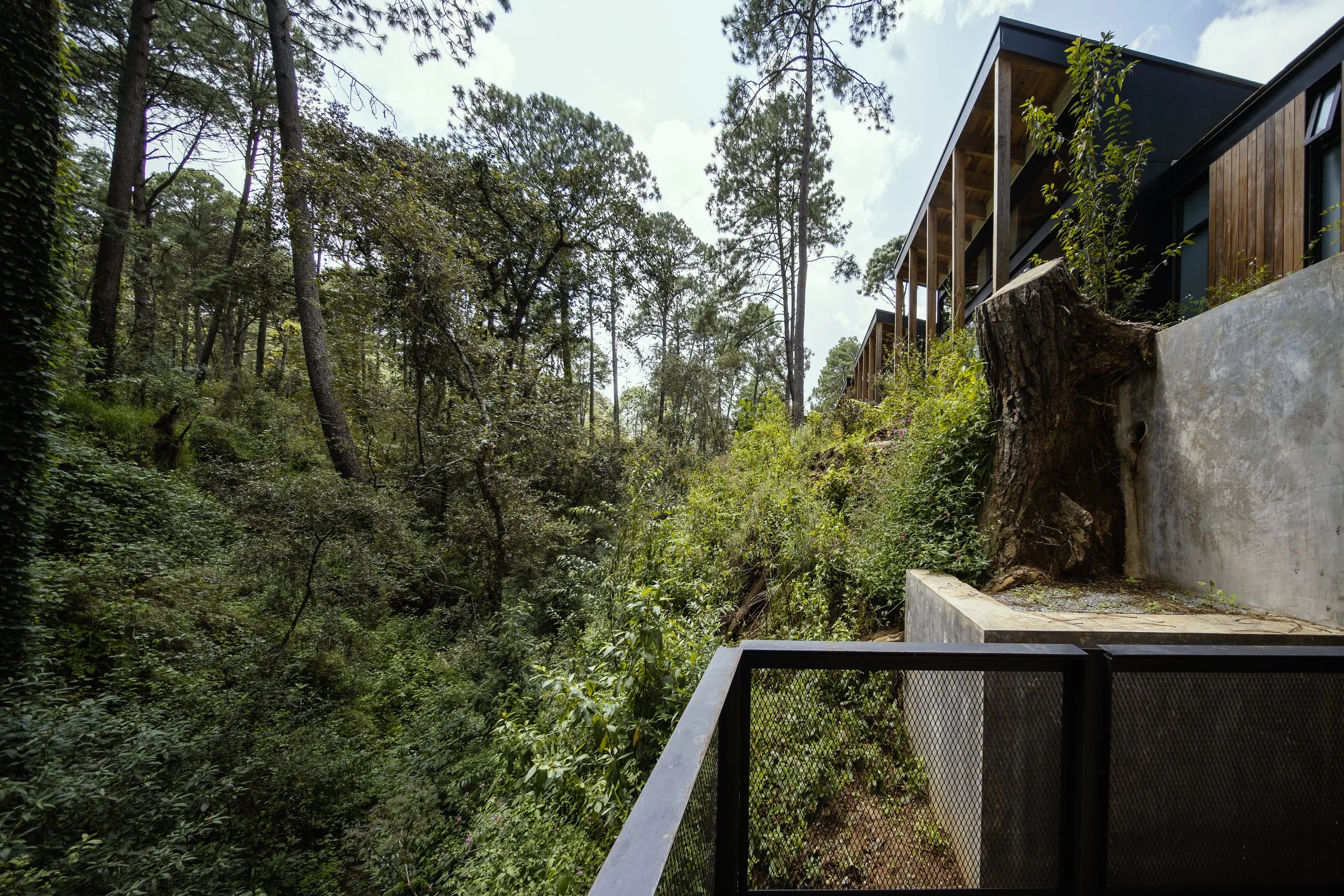
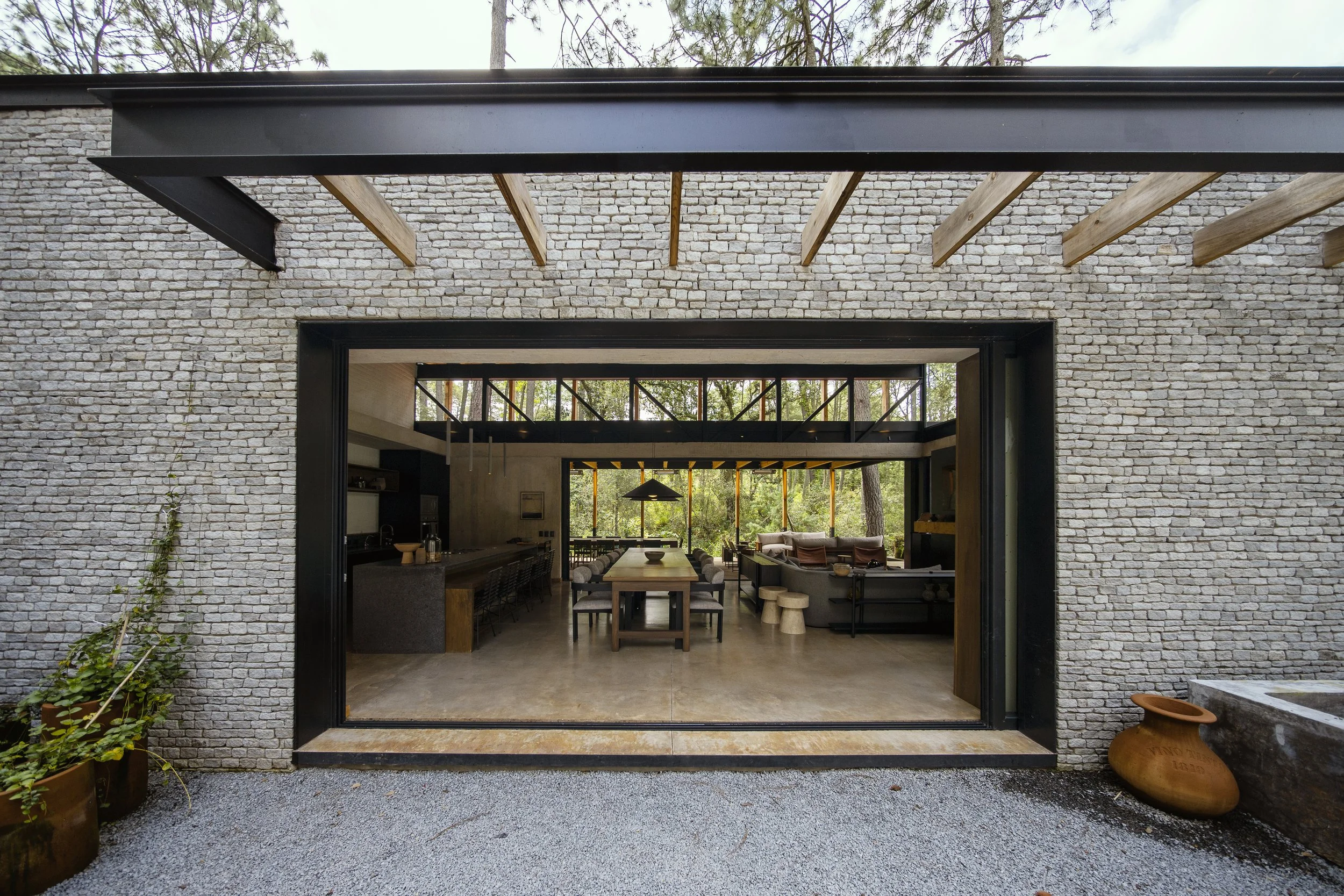
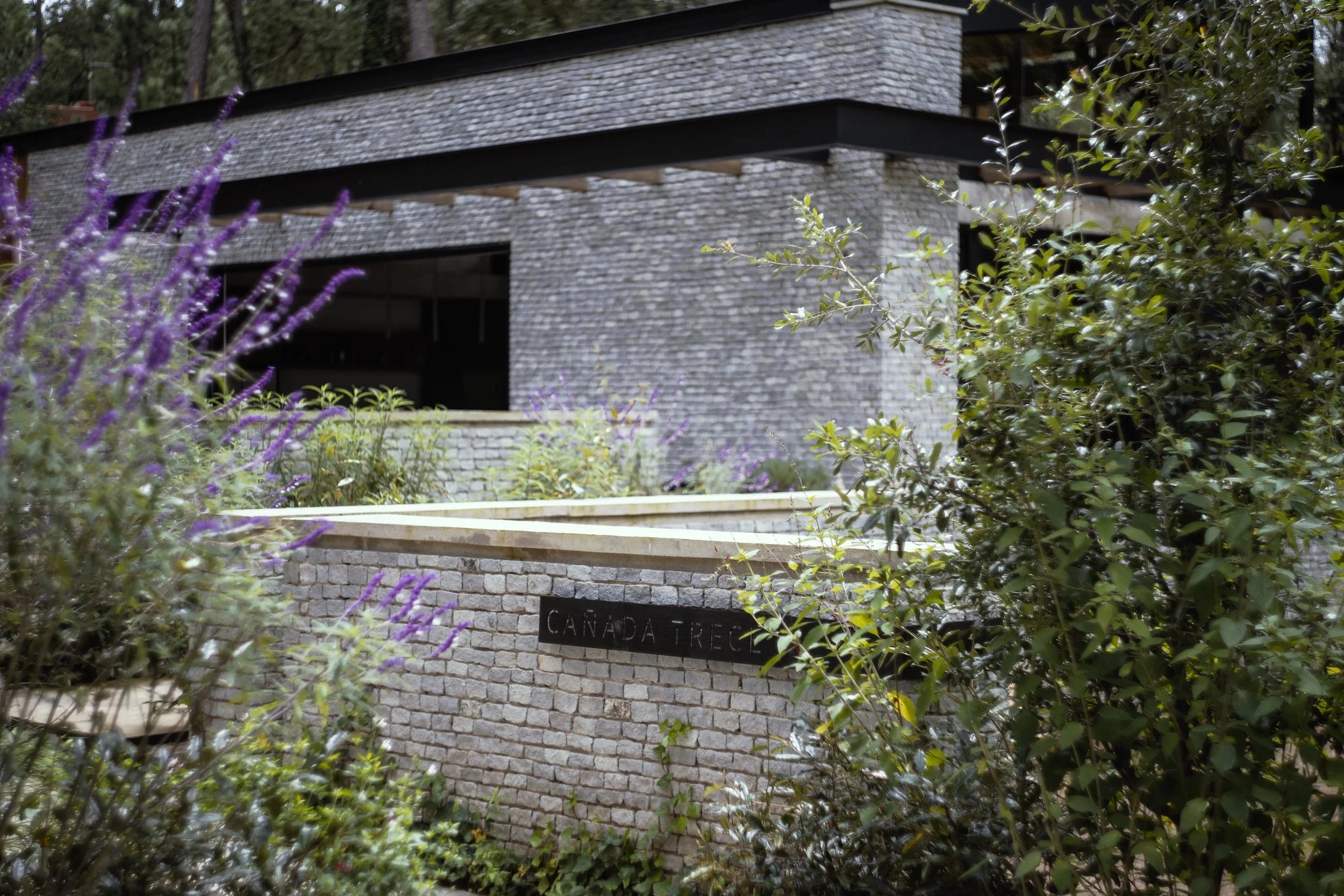
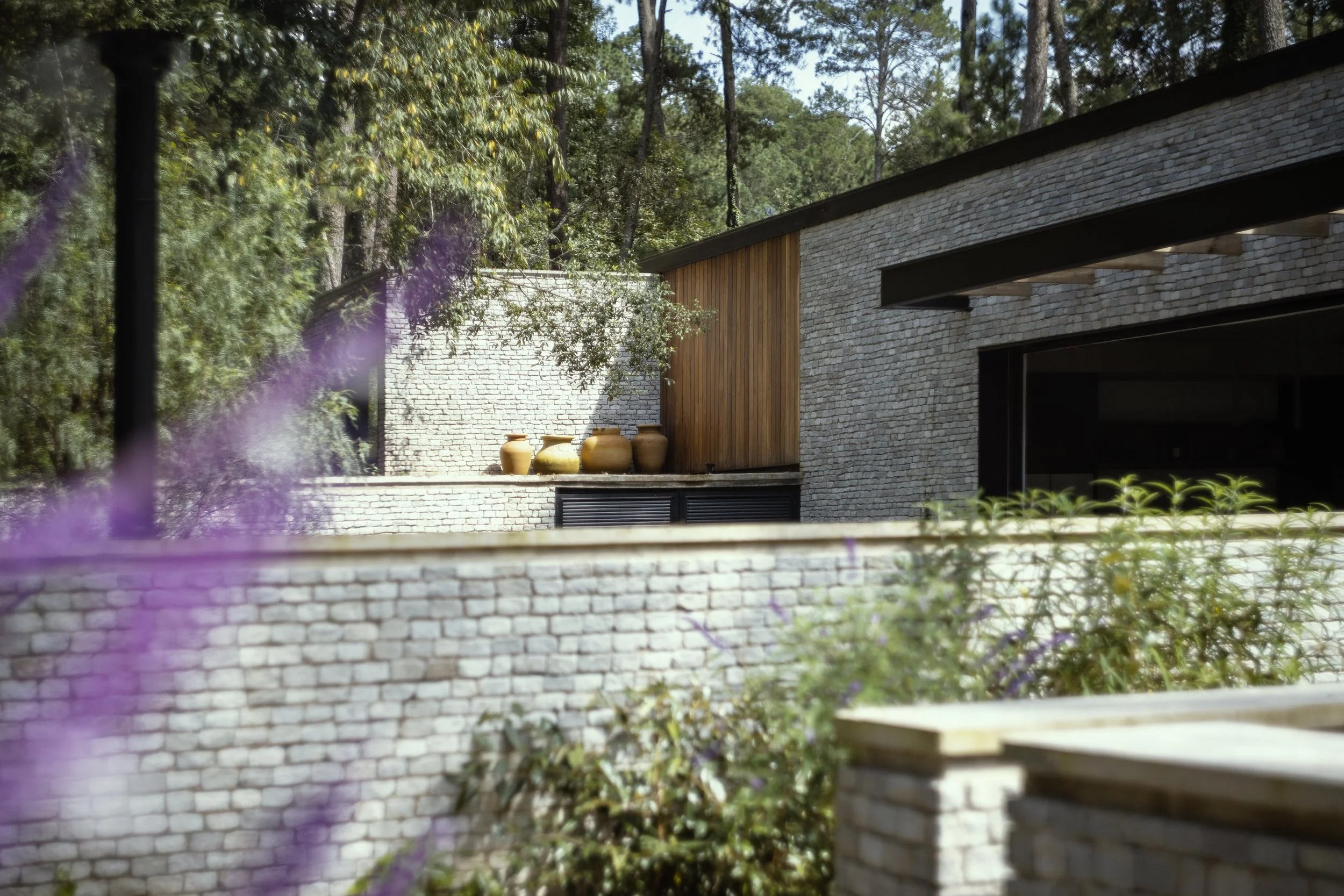
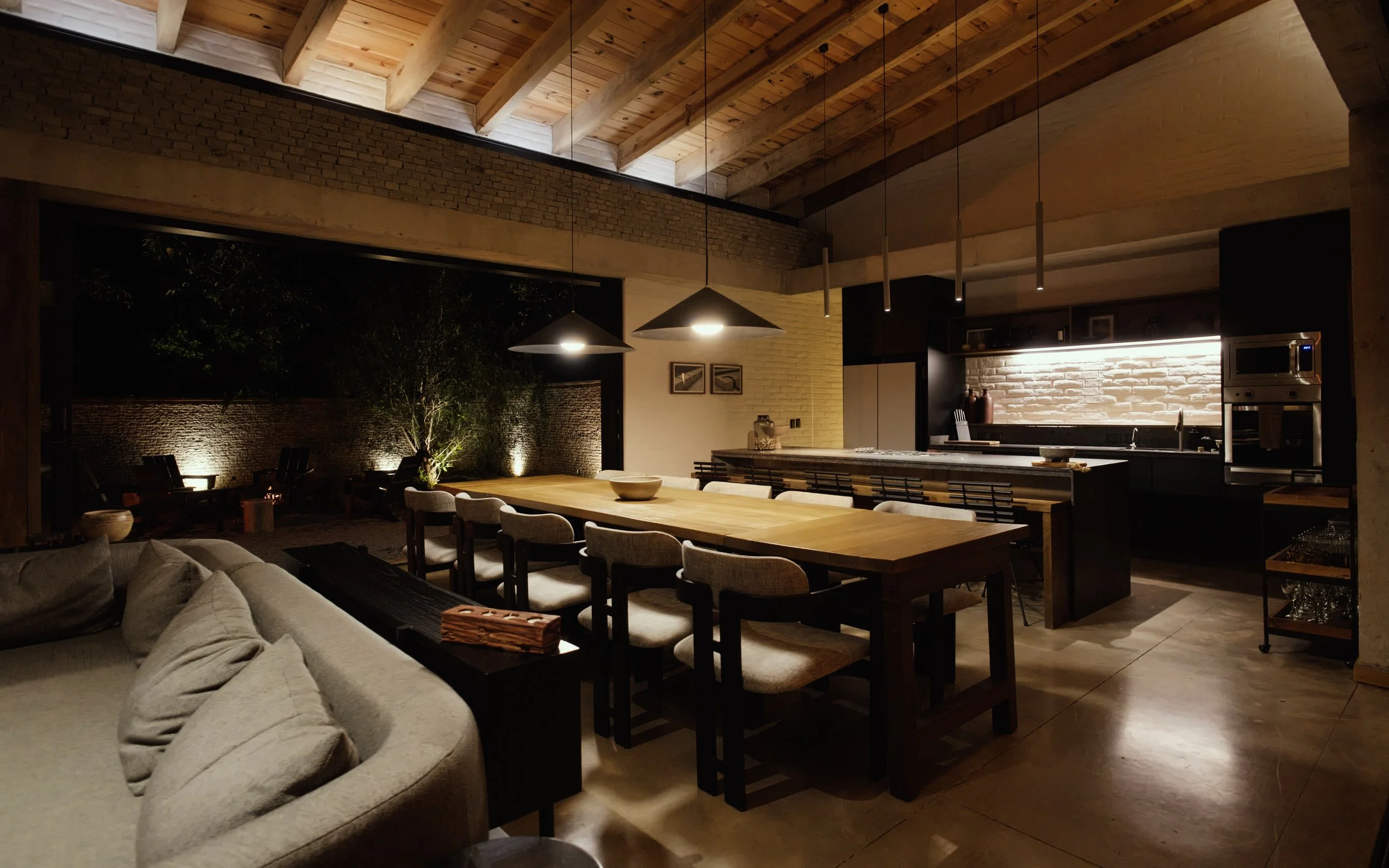
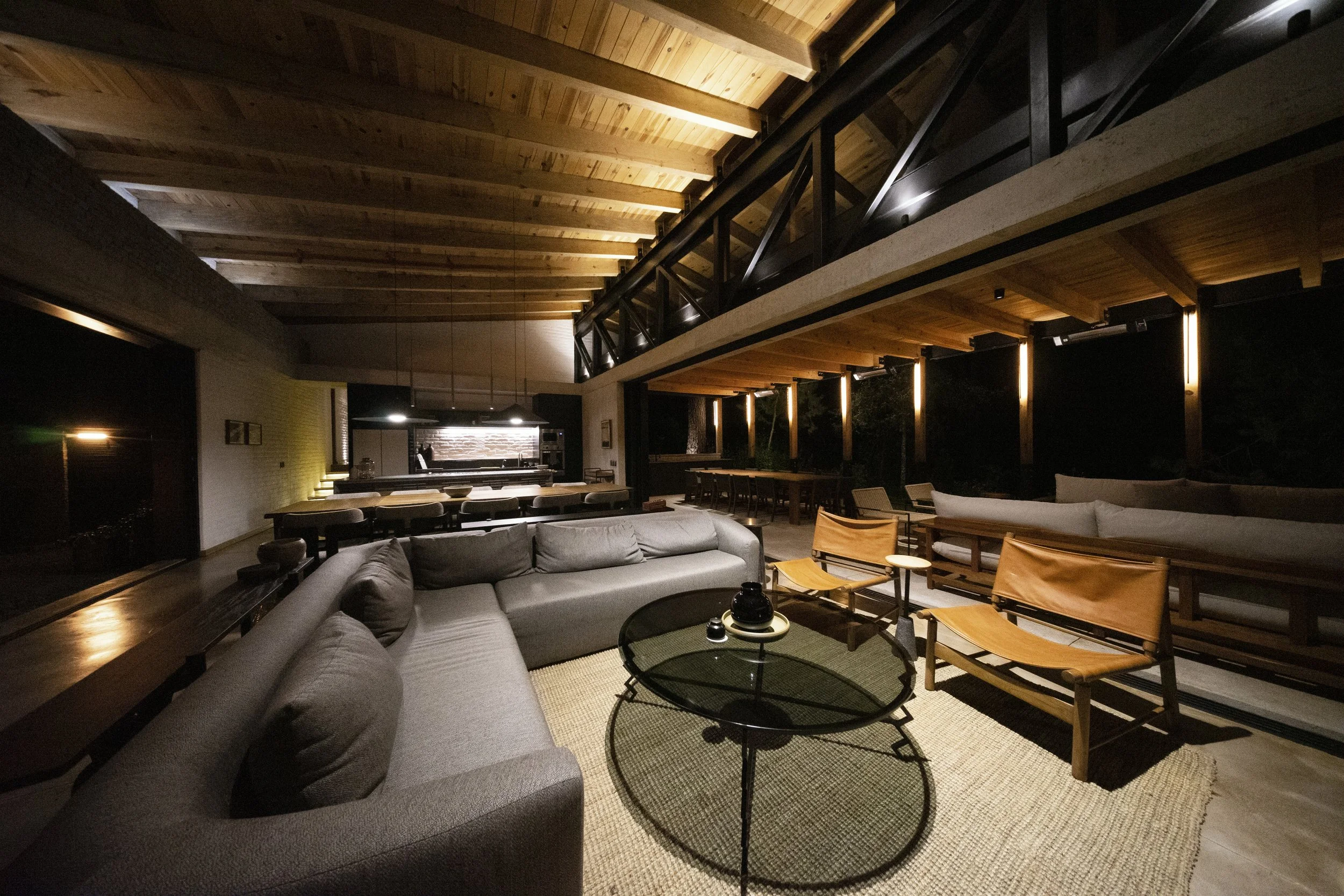
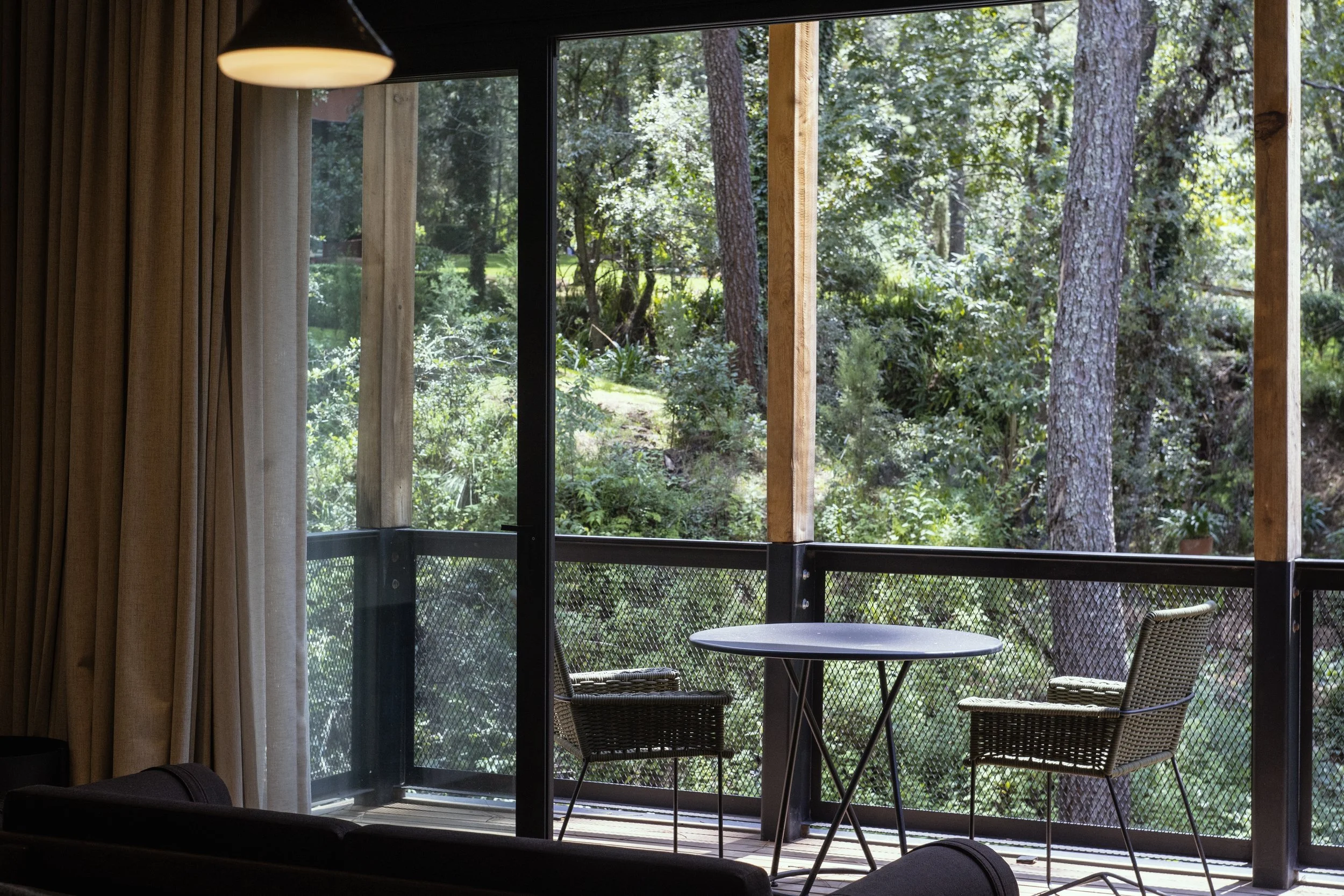
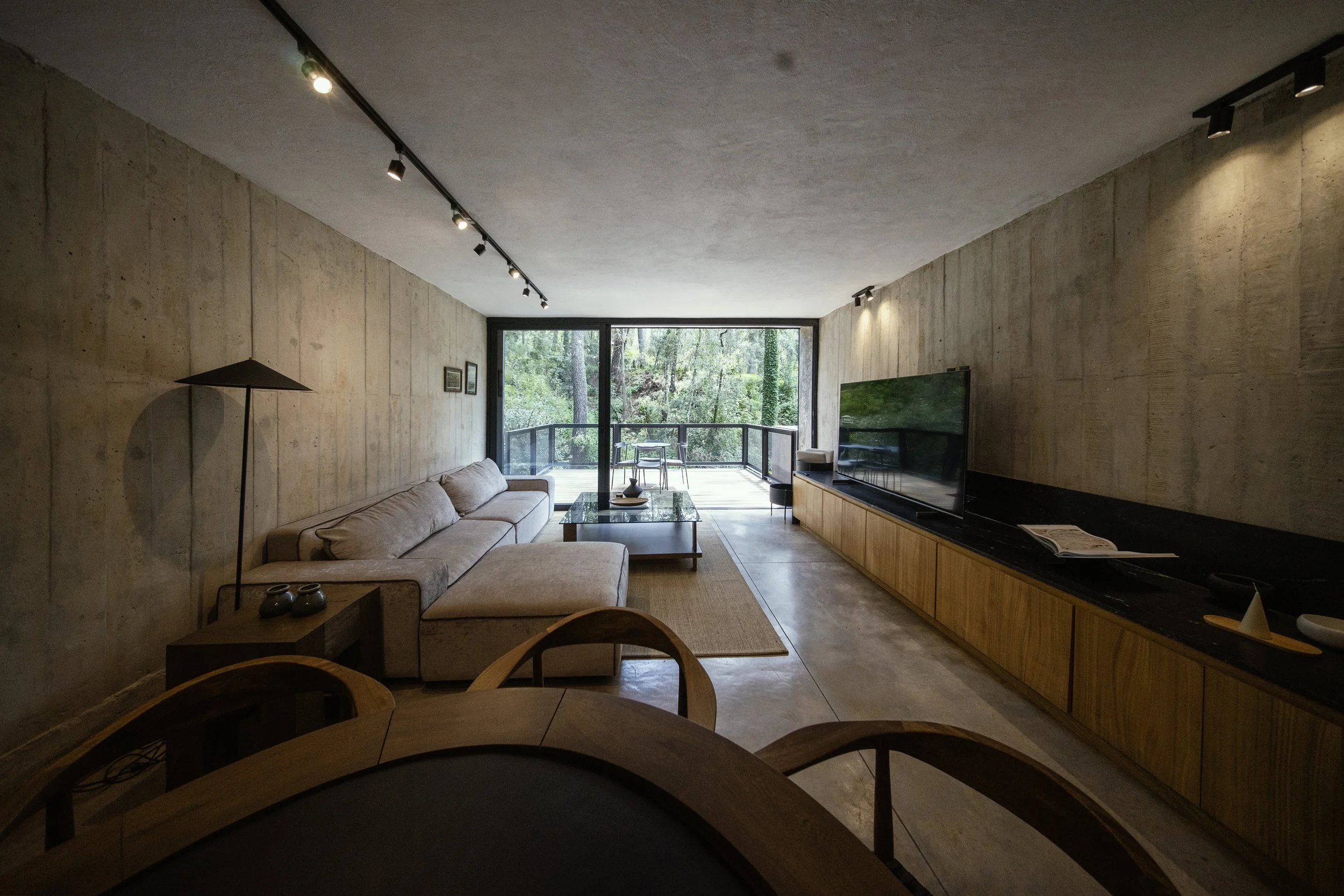
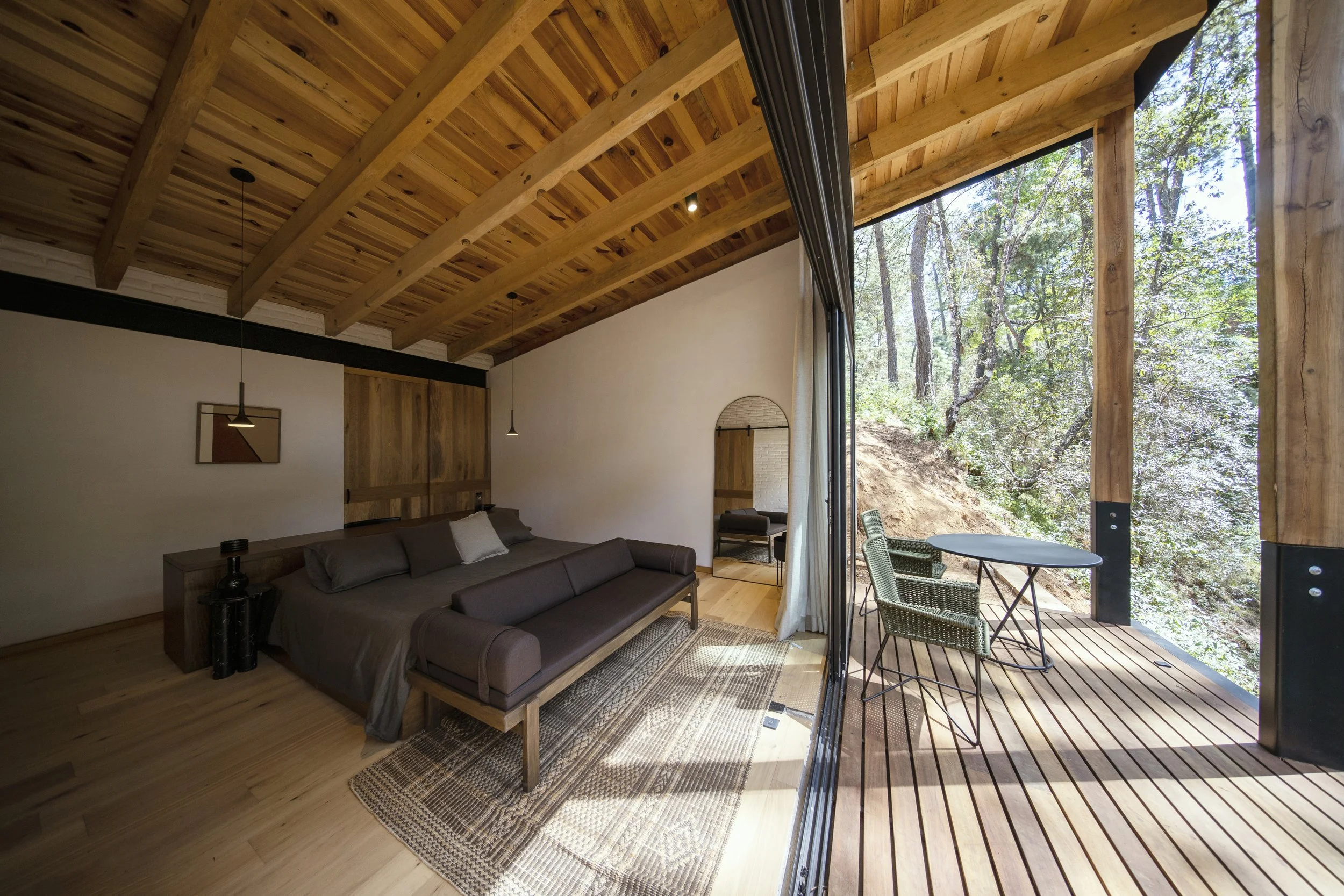
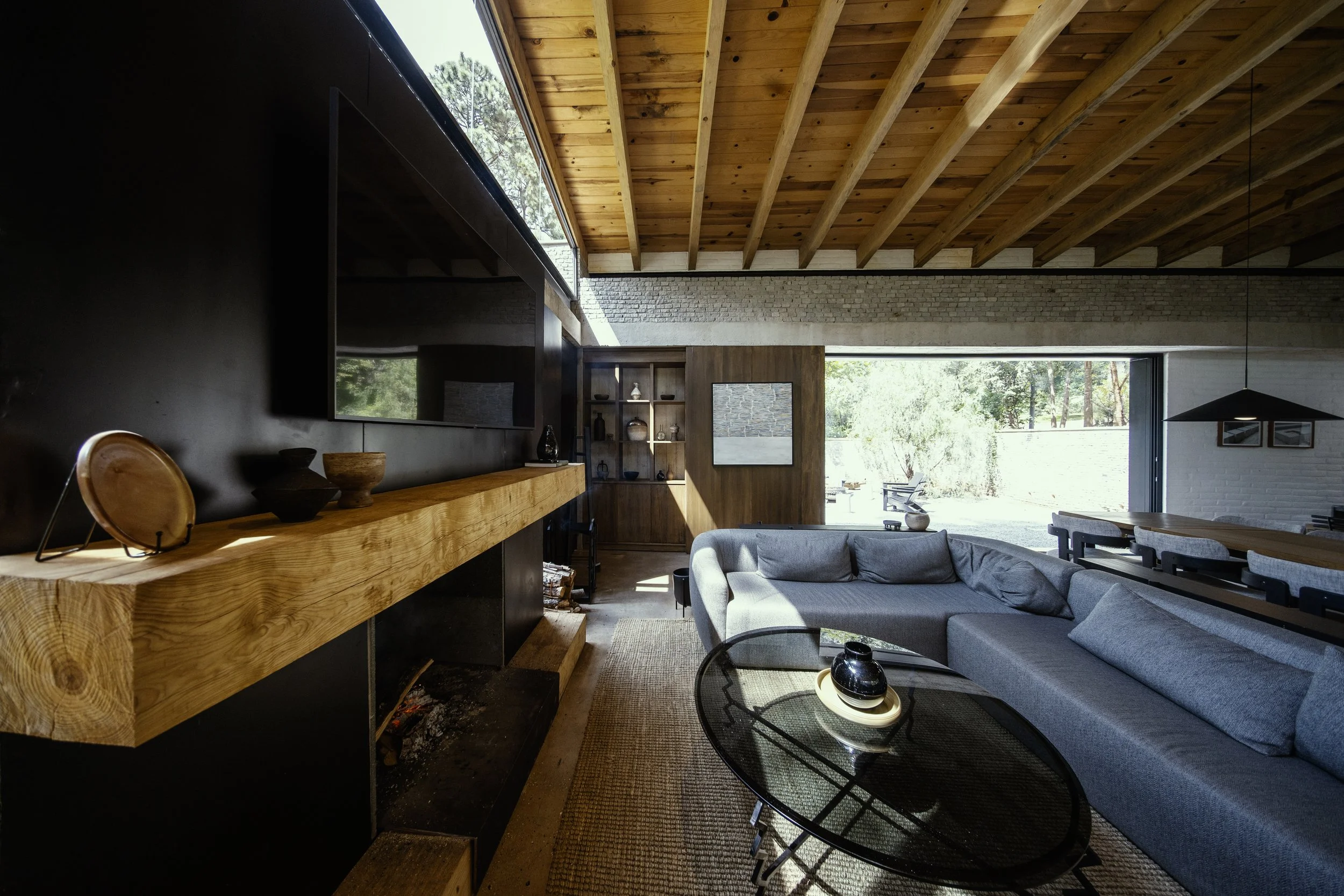
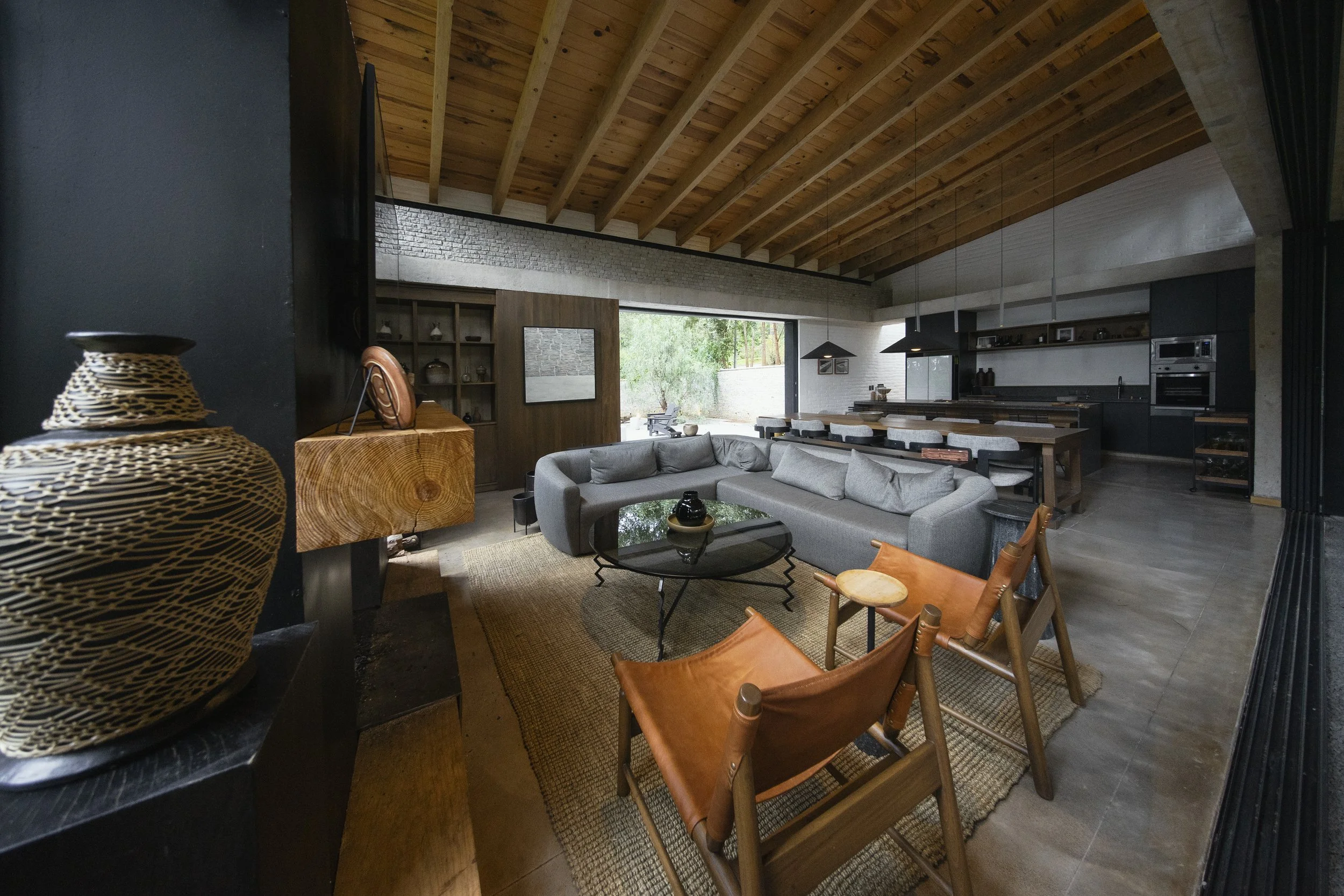
El proyecto consiste en una cabaña de fin de semana implantada en el borde de una cañada, buscando integrarse de manera respetuosa con el paisaje natural. La edificación se orienta hacia el bosque, aprovechando el arbolado existente como una pantalla vegetal que proporciona privacidad y define una atmósfera de calma y recogimiento.
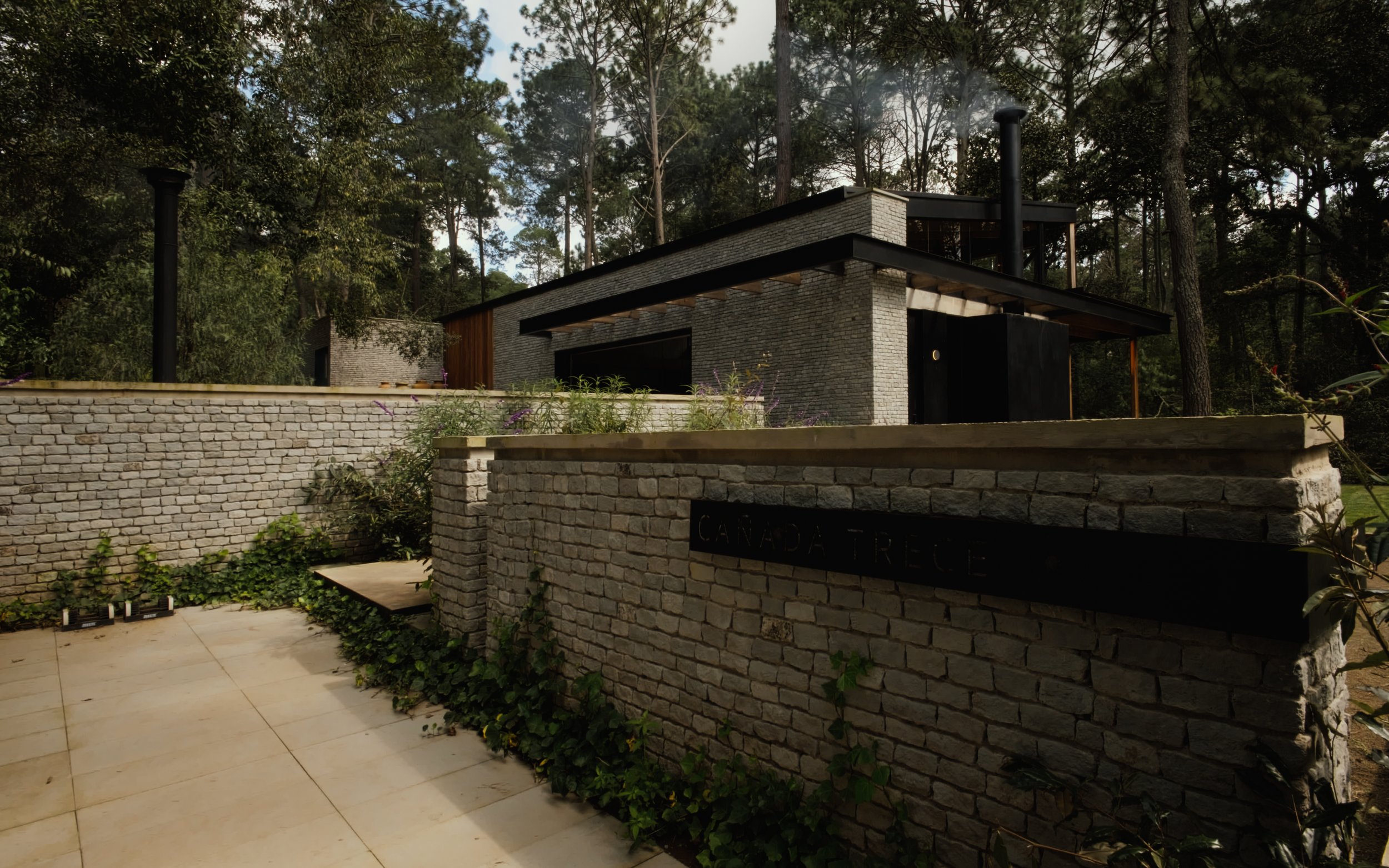
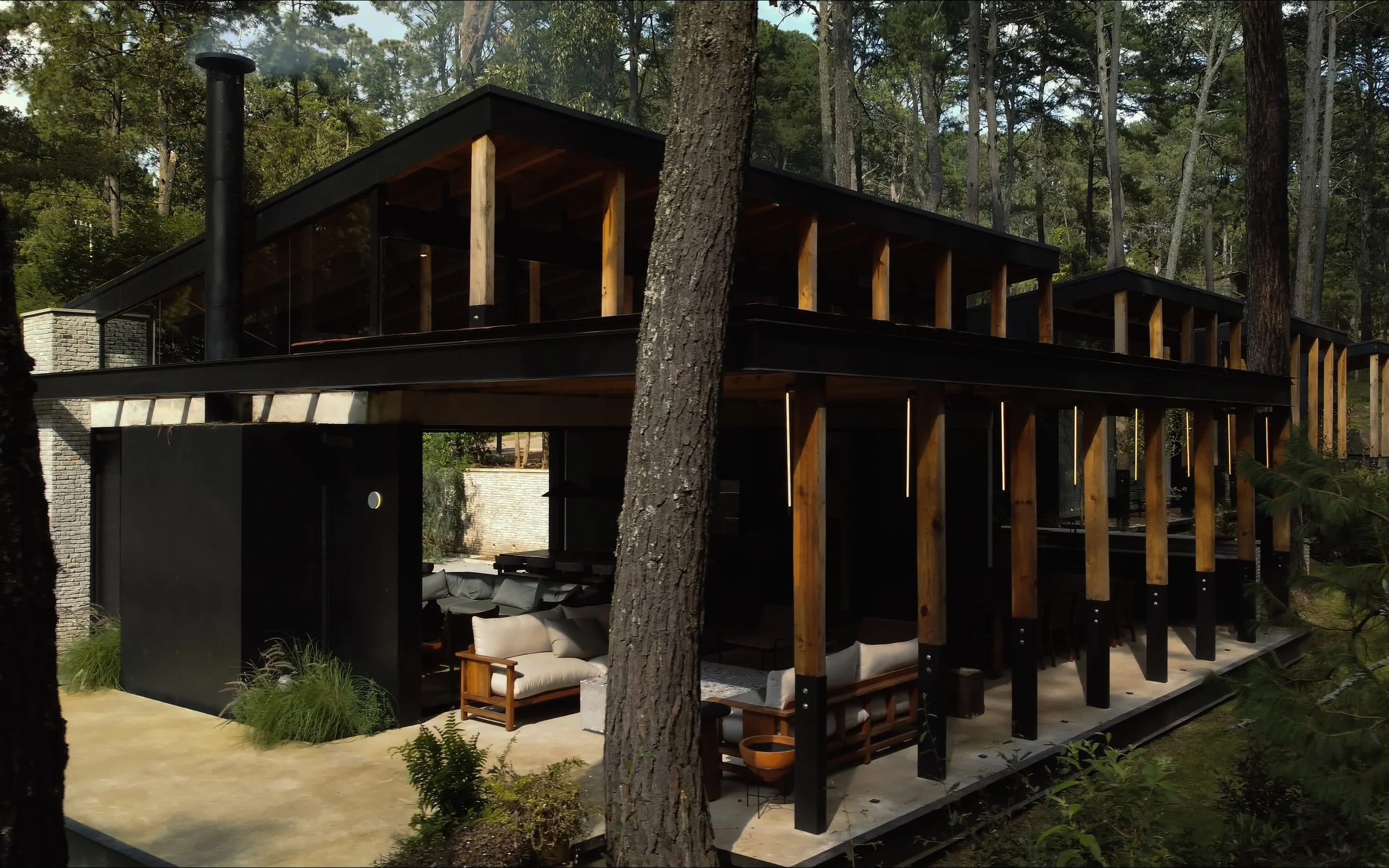
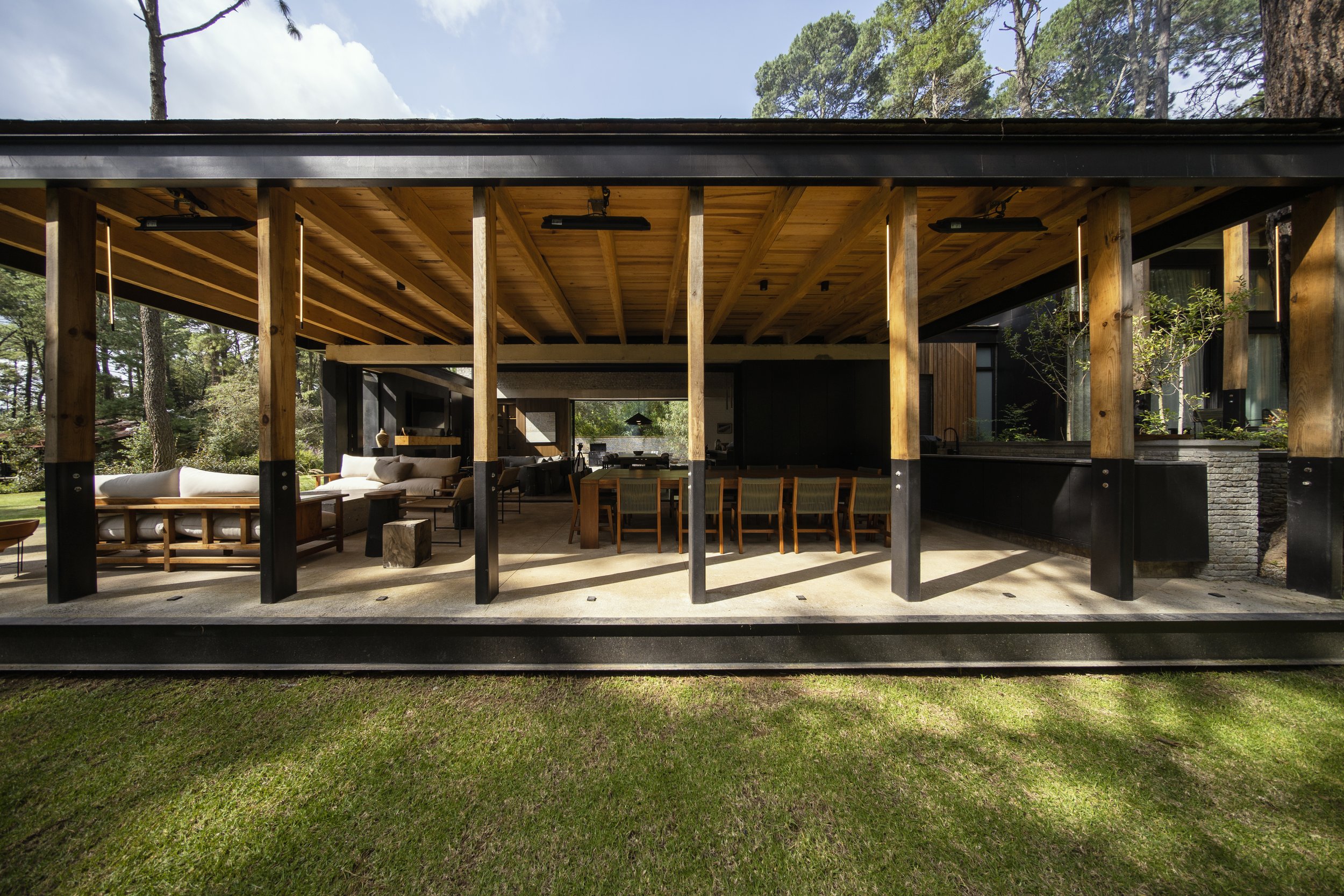
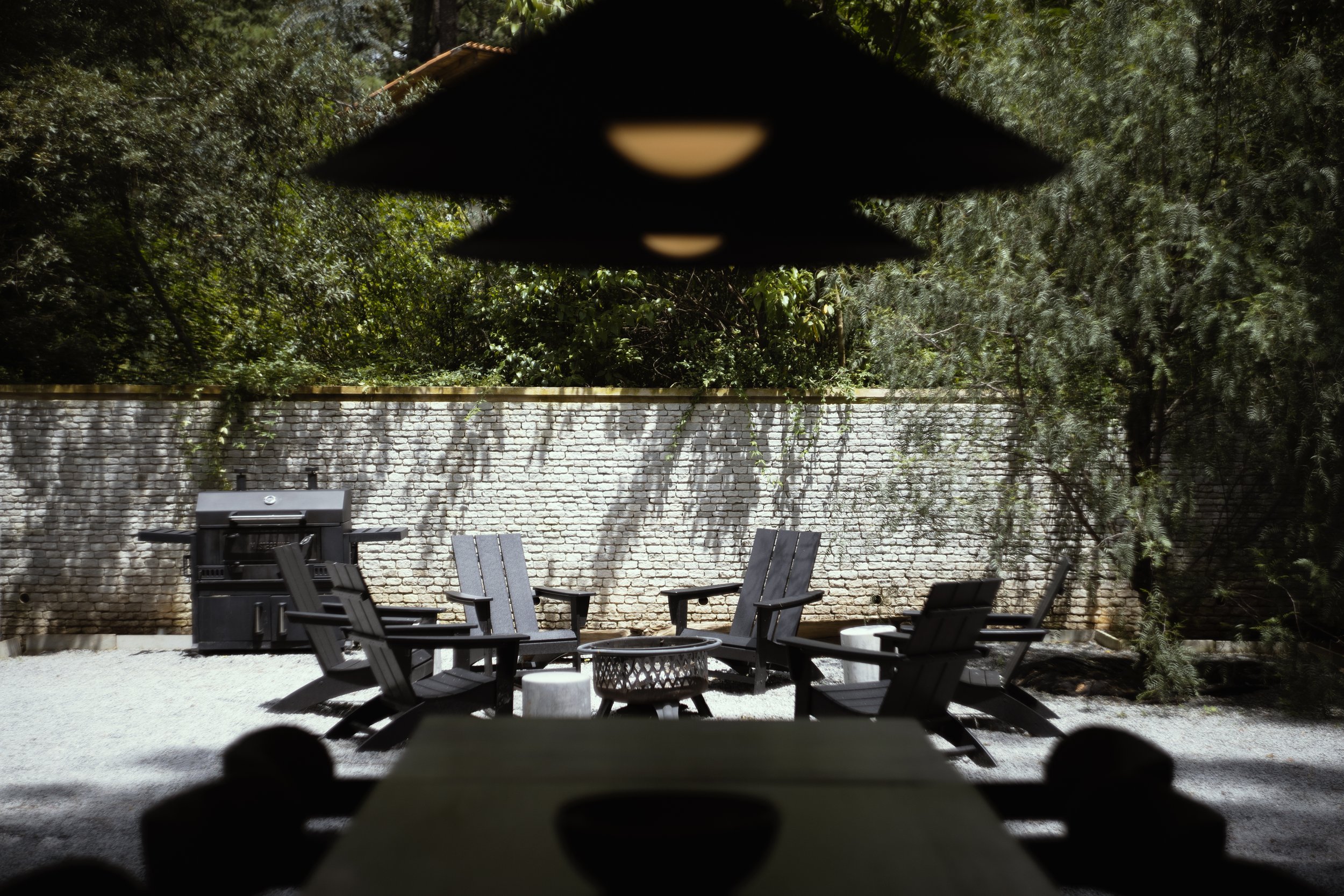
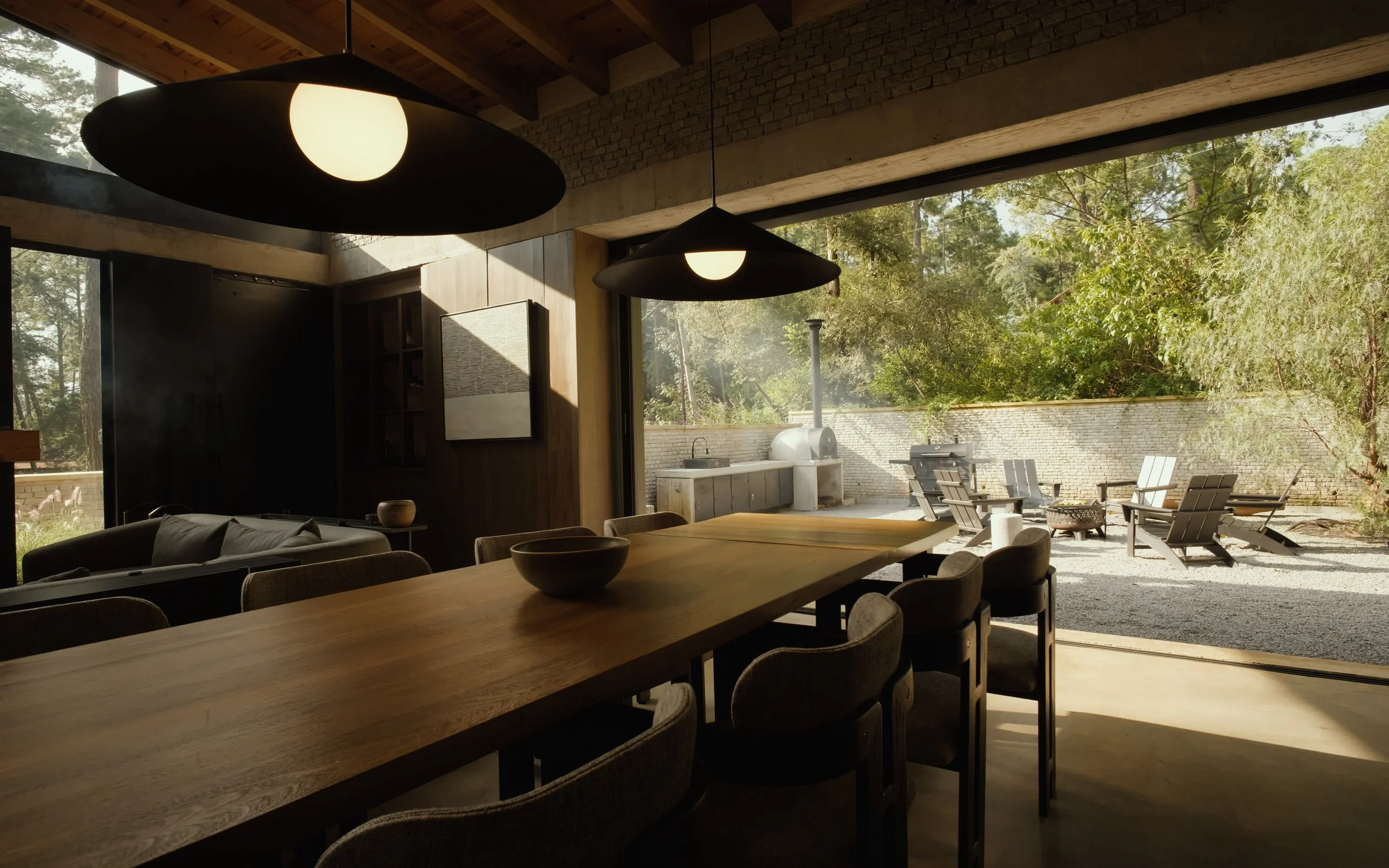
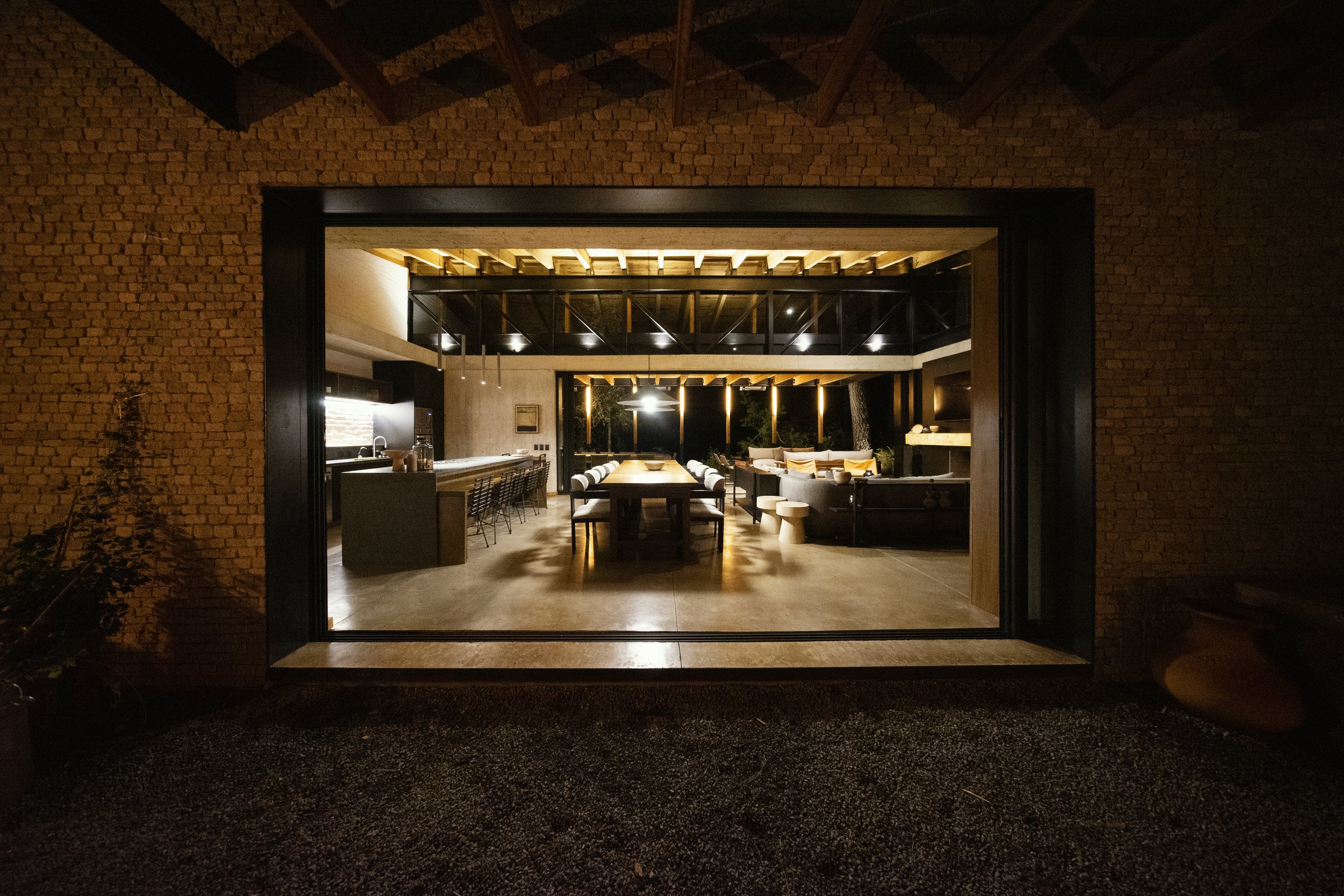
El acceso a las áreas públicas se organizan en torno a un patio que funciona como espacio articulador, permitiendo una apertura total hacia el exterior mientras resguarda visual y acústicamente el interior respecto a la calle. Hacia el fondo del predio, la arquitectura se vuelca completamente hacia la cañada, estableciendo una relación directa con el entorno natural.
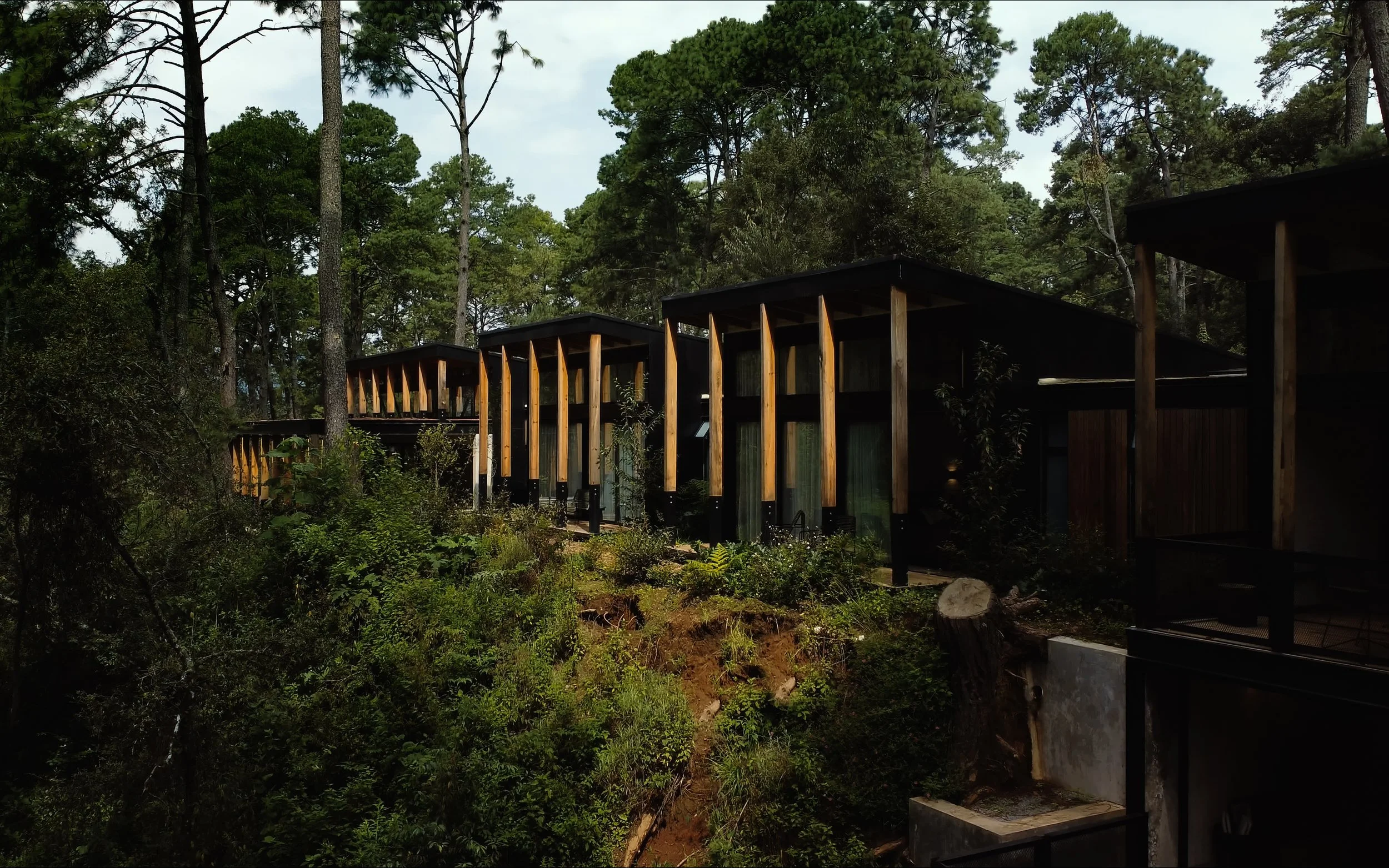
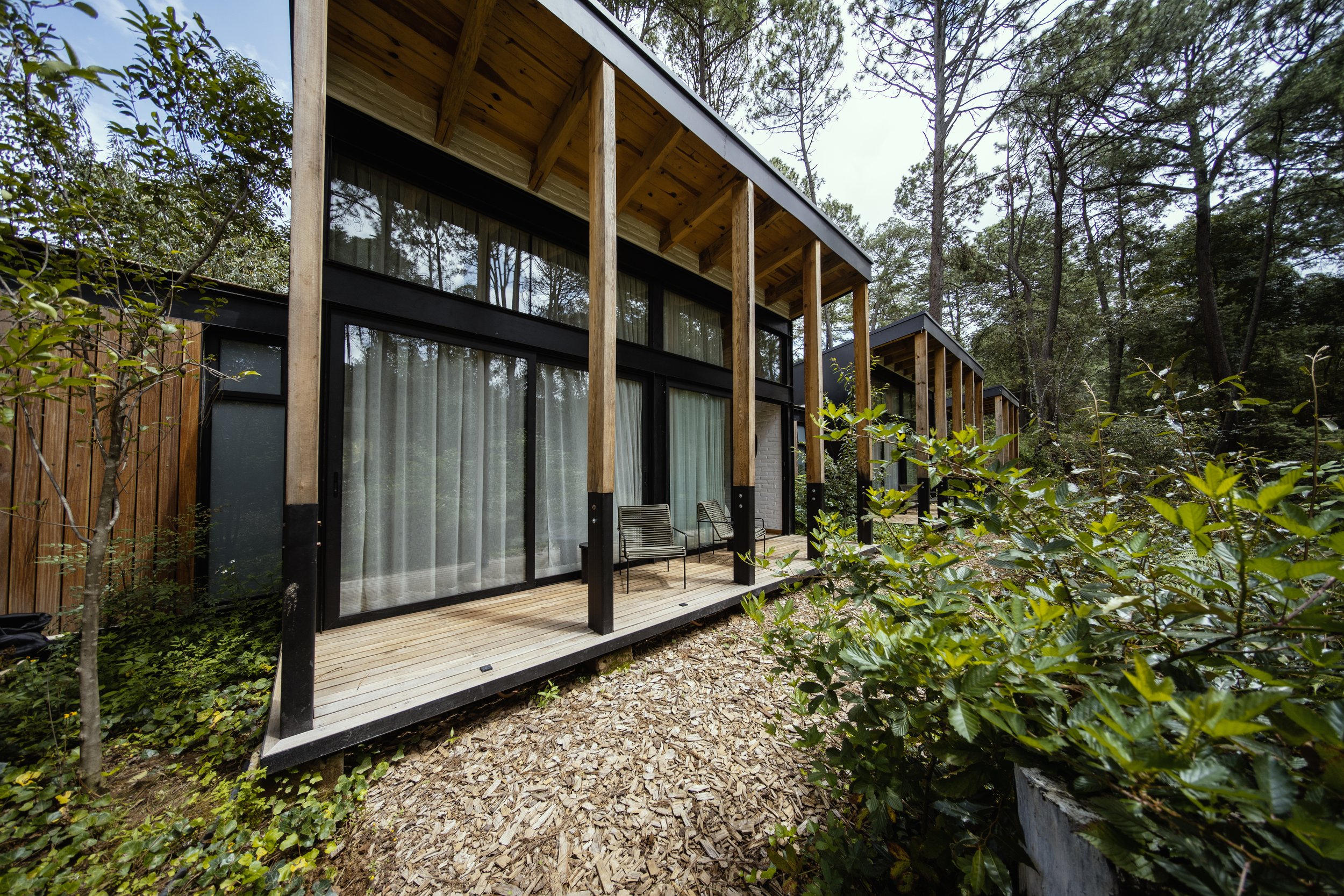
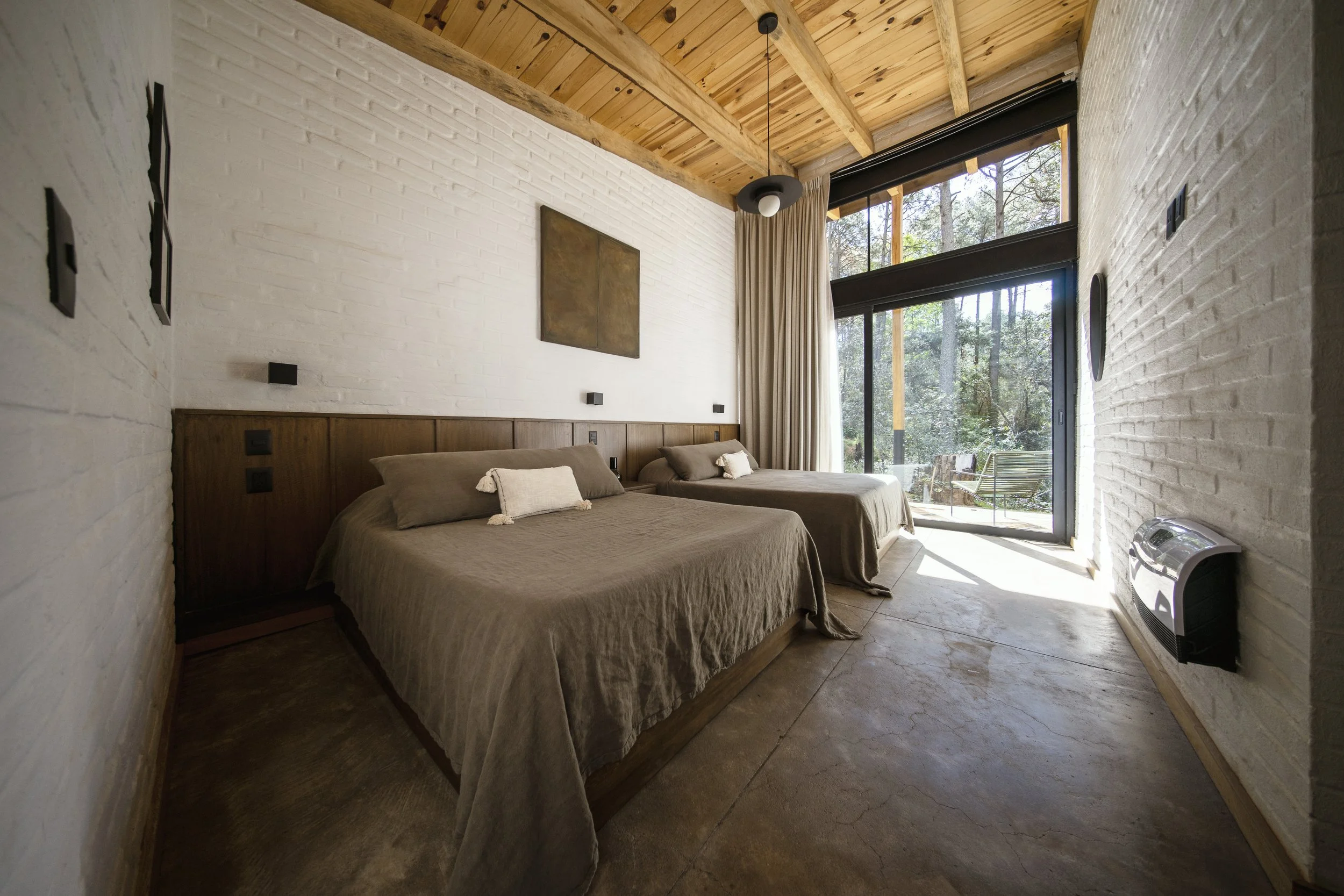
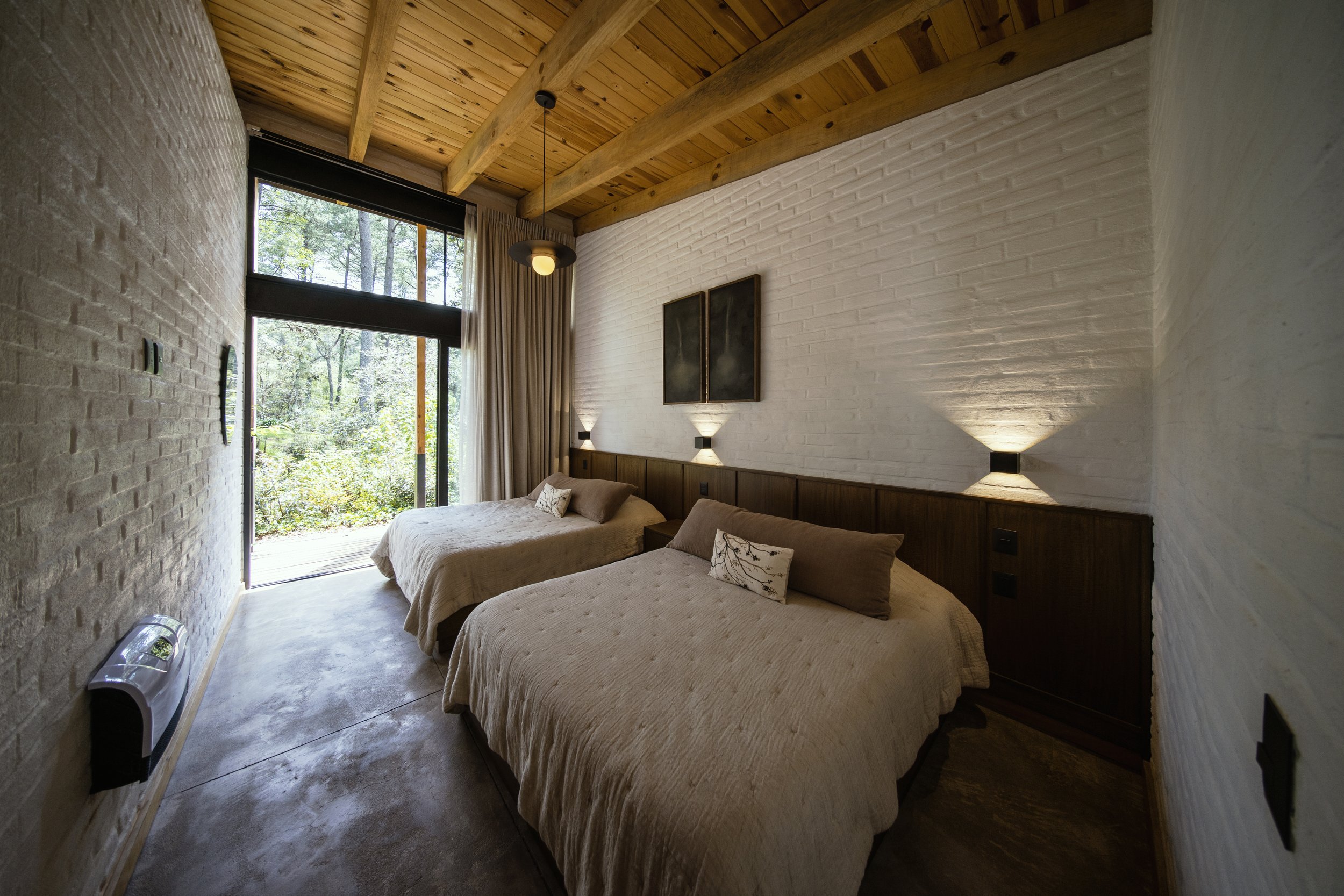
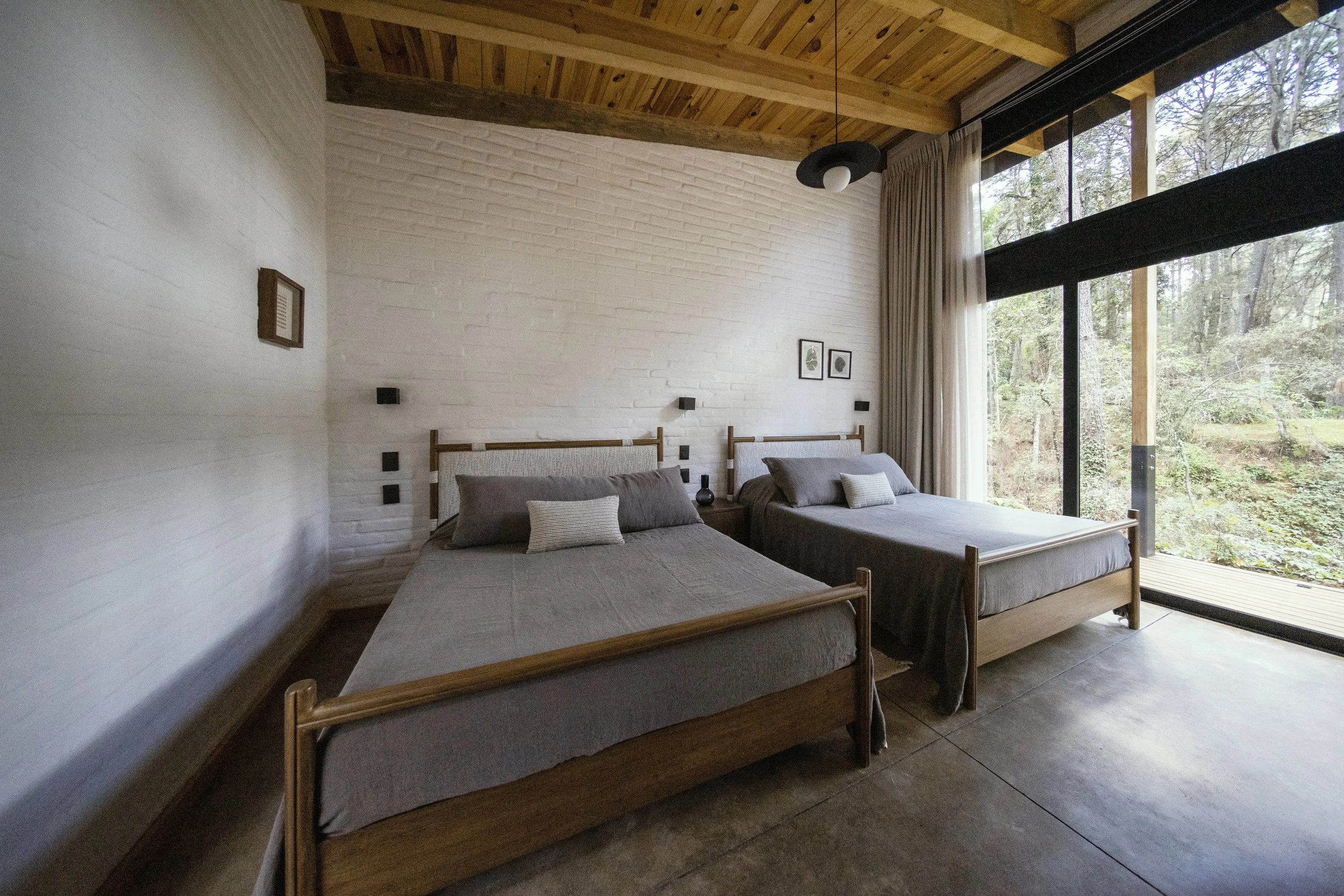
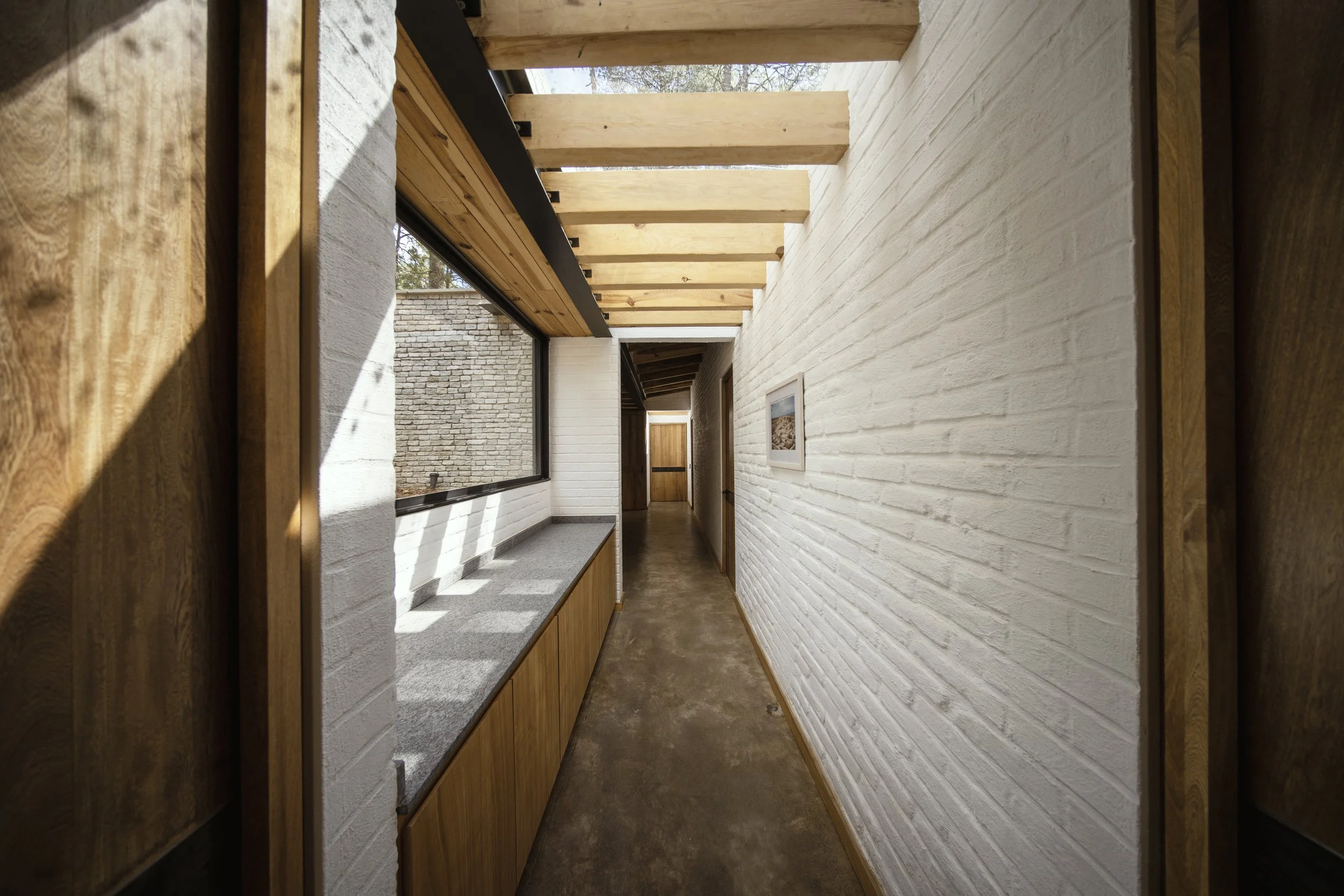
Las áreas de descanso se disponen de forma lineal, todas orientadas hacia el mismo paisaje, reforzando la continuidad visual y la experiencia contemplativa. La casa busca ofrecer un refugio sereno que favorezca la desconexión y el contacto directo con la naturaleza.
The project consists of a weekend cabin situated at the edge of a ravine, conceived to integrate respectfully with the natural landscape. The building is oriented toward the forest, using the existing trees as a living screen that provides privacy and establishes an atmosphere of calm and retreat.
Access to the public areas is organized around a central courtyard that acts as an articulating space, allowing the interiors to open fully to the exterior while visually and acoustically buffering the house from the street. Toward the rear of the site, the architecture turns completely toward the ravine, establishing a direct relationship with the natural surroundings.
The sleeping areas are arranged linearly, all oriented toward the same landscape, reinforcing visual continuity and a contemplative experience. The house seeks to offer a serene refuge that encourages disconnection and a direct connection with nature.